
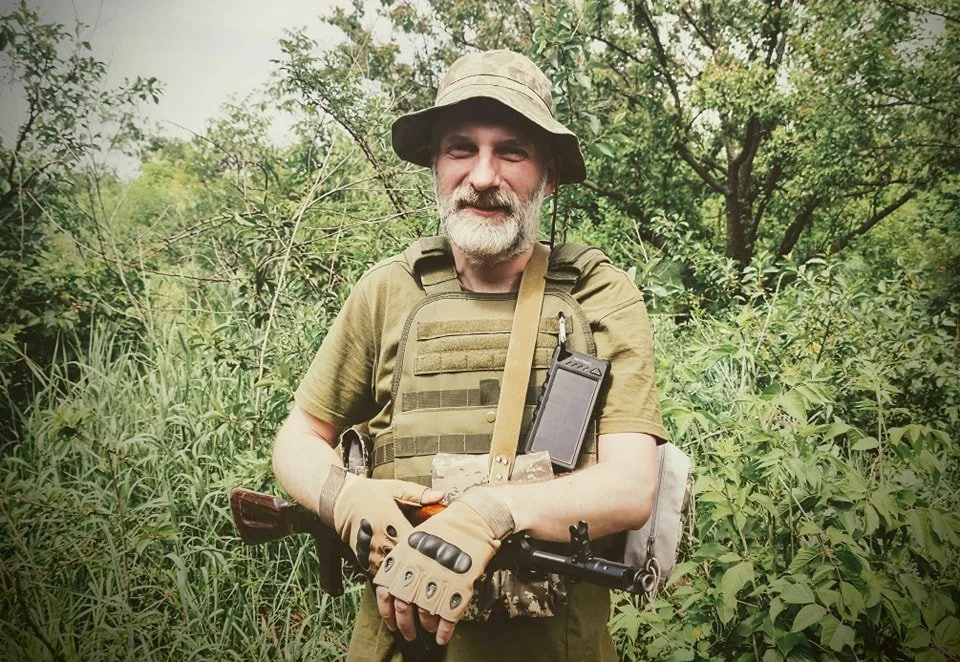
The Story of Pylyp Dukhliy
On Both Sides of Therapy
It is possible to live what appears to be a full life on the outside: leading projects, taking on responsibilities, trying new things, being socially engaged and successful. It is possible to spend years working with trauma and supporting those around you, and, at the same time, to remain within inner states that do not seem to change — not because of a lack of knowledge, but because there are experiences that cannot be changed through understanding alone.
Pylyp Dukhliy speaks as a veteran, a psychotherapist, and a person who has found himself on both sides of the therapeutic process.
Pylyp is a participant in HUT’s Group Ketamine-Assisted Psychotherapy (G-KAP) training program, as well as a participant in a veteran therapy group. His dual perspective of these experiences, as both a provider and seeker of help, makes his account particularly insightful.
His personal story includes years of living with cyclothymia. Periods of elevation would give way to exhausting lows that could take him out of life for weeks, limit his contact with others, and leave him alone with a sense of helplessness and shame. These states had been present since adolescence, but over time, they became deeper and more prolonged. After returning from the war, there was a period of relative stability. The proximity of death paradoxically brought a sense of clarity and intensity to Pylyp’s life. Yet as he gradually adapted to civilian life, these states returned and became even more pronounced.
By the time he joined the program, he had already undergone years of psychotherapy in different modalities and had experience with antidepressants that provided only temporary relief before the familiar cycles returned. His decision to try ketamine-assisted psychotherapy (KAP) was driven by a a deeply personal need to find a different way of working with his condition as well as a professional curiosity to understand whether this approach could be effective for others.
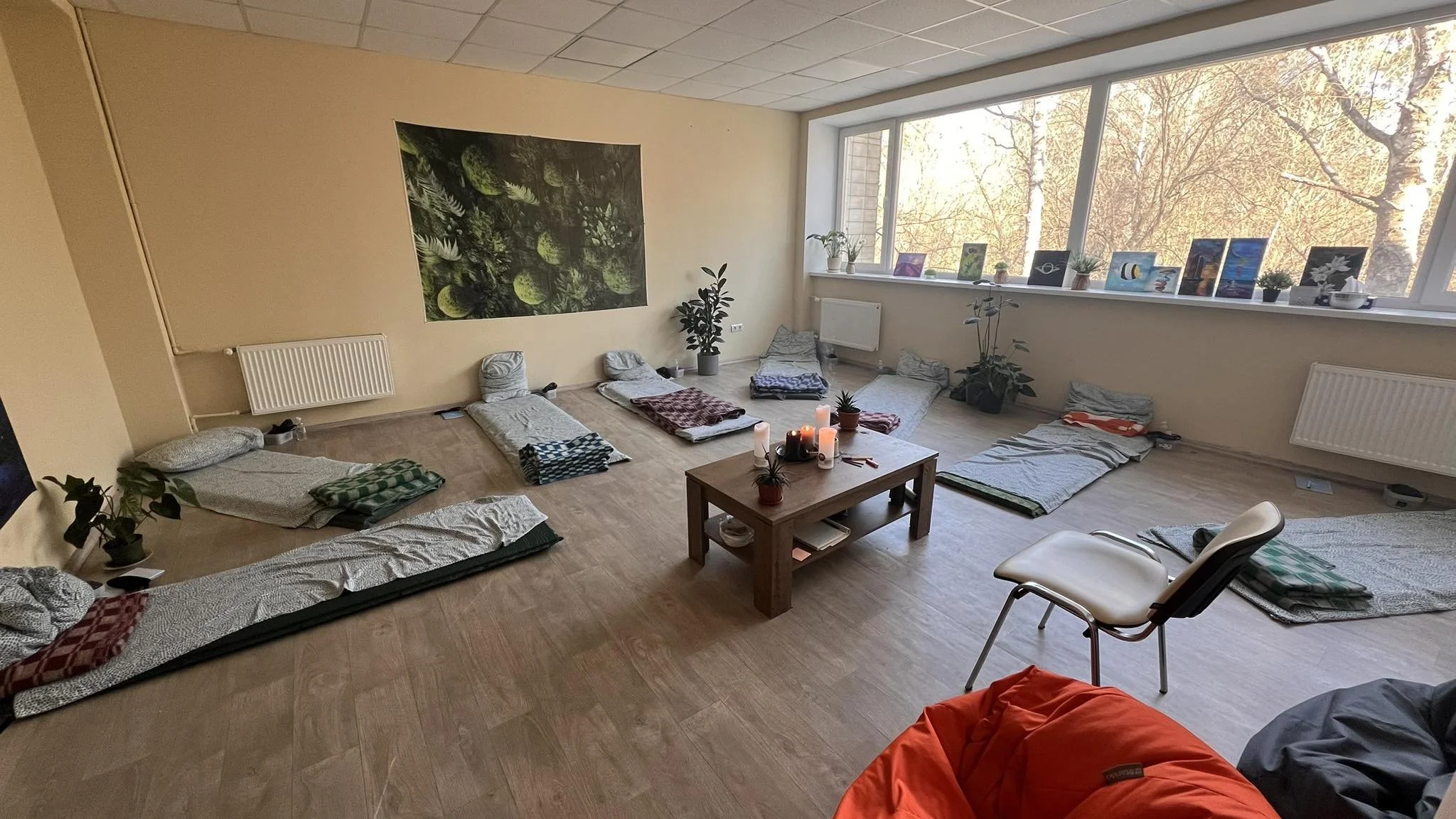
Pylyp does not hesitate to share that the first step into this experience was accompanied by fear and tension. The questions that arose were common ones: Will I be able to control the process? What exactly will I encounter? Will I return to my usual state? At the same time, he felt a sense of trust in the process and a willingness to allow the experience to unfold, even without fully knowing what it would be.
Pylyp describes the experience itself as a state in which habitual critical control softens and the need to constantly manage everything begins to fade. There is an opportunity to observe one’s own processes without the usual defenses. One of the most vivid images he recalls is the feeling of being like a flattened metal tube, as if there were no space left to breathe.
Through this experience, realization gradually emerged about how much of his life was spent holding back emotions, movement, reactions, and the ability to express himself. The change that followed was equally concrete: a shift from constant containment toward allowing expression and contact.
The changes Pylyp describes are not dramatic transformations, yet they are tangible. For a month after the sessions, he did not experience depressive episodes. He had more energy, improved sleep, and new skills of self-regulation, particularly through working with the body and relaxation.
He also emphasizes the importance of the group format. For him, it was not only about support, but about expanding one’s own experience. When others shared their stories, he began to recognize parts of his own process in them;to see more clearly and in greater depth.
Importantly, Pylyp does not present this approach as a universal solution. For him, it is a tool that only gains meaning when you go through it yourself and take responsibility for how you work with what emerges. It is one method to make psychotherapy for veterans more effective and less prolonged, but each patient will have unique needs and courses of treatment.
For himself, Pylyp’s conclusion was almost simple: not to hold himself back where expression is possible. Instead of spending so much energy holding everything inside, he can better direct his energy outward towards continuing to help others on their own healing journeys.