
Service and Purpose: Thoughts from the Frontline
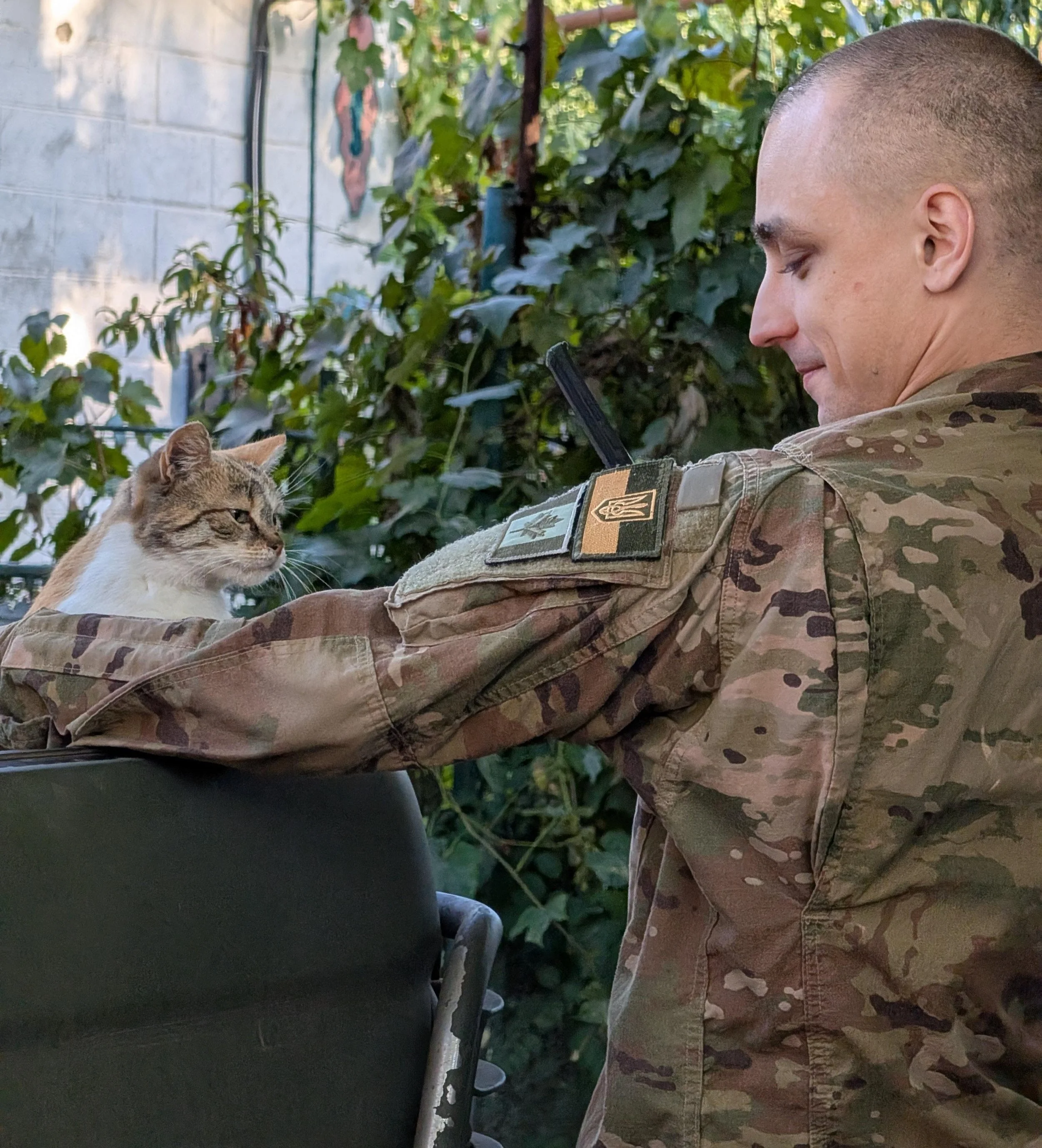
As the fourth anniversary of Russia’s full-scale invasion of Ukraine approaches, Heal Ukraine Trauma remains steadfast in its commitment to supporting veterans and their families as they heal from the psychological toll of war. Every day, Ukrainians continue to defend their country under extraordinary conditions, carrying burdens that extend far beyond the battlefield.
At HUT, our work is shaped not only by clinical evidence and long-term recovery goals, but also by the lived realities of those closest to the frontlines. Perspectives from the field help ground our programs in what is happening now and remind us why this work matters.
This post is written by Maxime, a former Canadian military officer serving as a foreign volunteer medic on the frontlines in Ukraine and a dedicated supporter of HUT’s mission. His reflections offer an unfiltered view of the human cost of war and the resilience of those who continue to serve, providing vital context for the healing work that must follow.
During my time in Ukraine, I have been privileged to serve alongside men and women who are eager to keep on serving, despite the extreme perils in which this places them. I am speaking of foreign volunteers who, despite being under no obligation to put themselves in harm’s way, keep on coming back to Ukraine; I am also speaking of Ukrainian citizens who, while they may not even be subject to conscription, volunteer for service anyways. I have found that the reason for such decisions is, in many cases, that wartime military service gives significant meaning to soldiers’ lives. In uniform, they feel recognized, and at the front, they form bonds the strength of which are scarcely encountered in the civilian world. For others, duty and an overwhelming need to serve push them forward. In the face of exceptional circumstances, soldiers feel that their lives matter in ways that were not possible in their lives before the war.
What happens, then, when the service of those soldiers comes to an end? This will sometimes be due to injuries. To those individuals, hearing that “their” war is over is not a source of comfort but in fact, of considerable anxiety. They lose their sense of purpose, and may, for instance, feel guilt over what they perceive as abandoning their comrades. They may perceive death as a mercy and, indeed, in their darkest moments, may seek it out, or engage in self-destructive behavior.
There are also those who will be demobilized once the war ends: in Ukraine, this means that potentially hundreds of thousands of soldiers will return to civilian life, and they will face many of the same conundrums as their wounded comrades. What happens then? The sheer volume of transitioning personnel will pose a significant challenge, both to the Ukrainian state and to Ukrainian civil society, as a significant portion of the population may be thrust into a crisis of meaning.
Yet, therein also lies a significant opportunity for Ukraine: harnessing the motivation of all of those veterans towards rebuilding the country to make it stronger and better than it was before. These former soldiers may still want to serve their country, and they should be empowered to do so. Many veteran organizations in NATO countries, formed in the course of the wars in the Middle East (Helmets to Hardhats, Team Rubicon, and others), have concretely demonstrated the enormous potential that veterans have in making the world a better place when they are given opportunities. For individuals, being allowed to continue serving in such a way is also beneficial for mental health, as they retain the sense of purpose and camaraderie that they got from military service. Creating useful outlets for veterans’ dedication and skills can lead to exceptional opportunities for these individuals—and Ukraine as a nation—to grow.
By: Maxime Grenier
This is why Heal Ukraine Trauma continues its work without pause. It is why we train Ukrainian clinicians in Group Ketamine-Assisted Psychotherapy, support veteran treatment groups, create spaces of care for spouses and caregivers, and deliver trauma-recovery programs like Teaching Recovery Techniques for children. Healing does not wait for the war to end, and neither do the needs of those carrying its weight every day.
As long as veterans are returning from the front, families are living with uncertainty, and children are growing up amid conflict, HUT will remain committed to building pathways to healing that are evidence-based, community-driven, and led by Ukrainians themselves. The stories from the frontlines remind us what is at stake, and they strengthen our resolve to continue this work for the future of Ukraine, one where veterans are not only healed but empowered to keep serving, rebuilding, and shaping a better tomorrow.
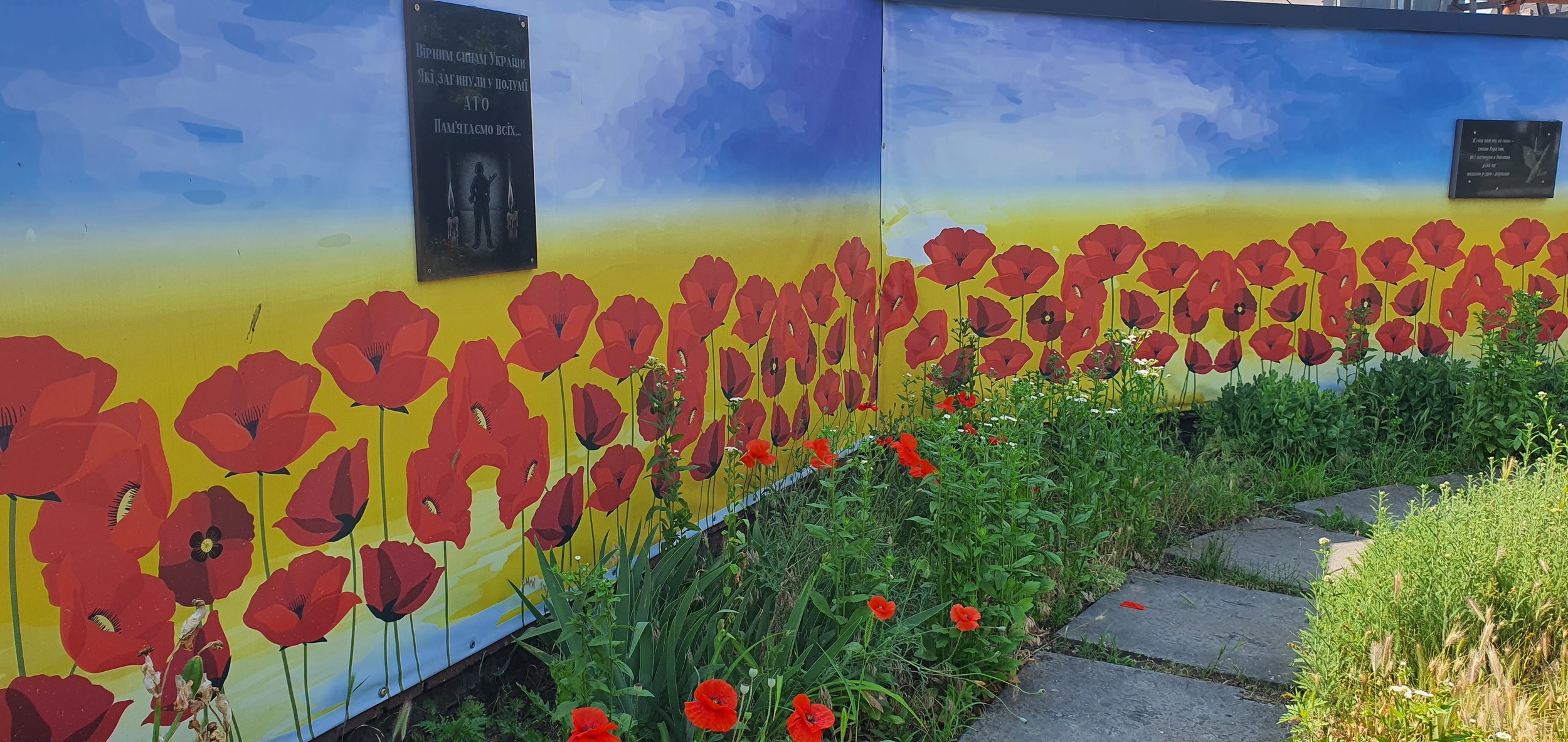
Photo by Maxime Grenier